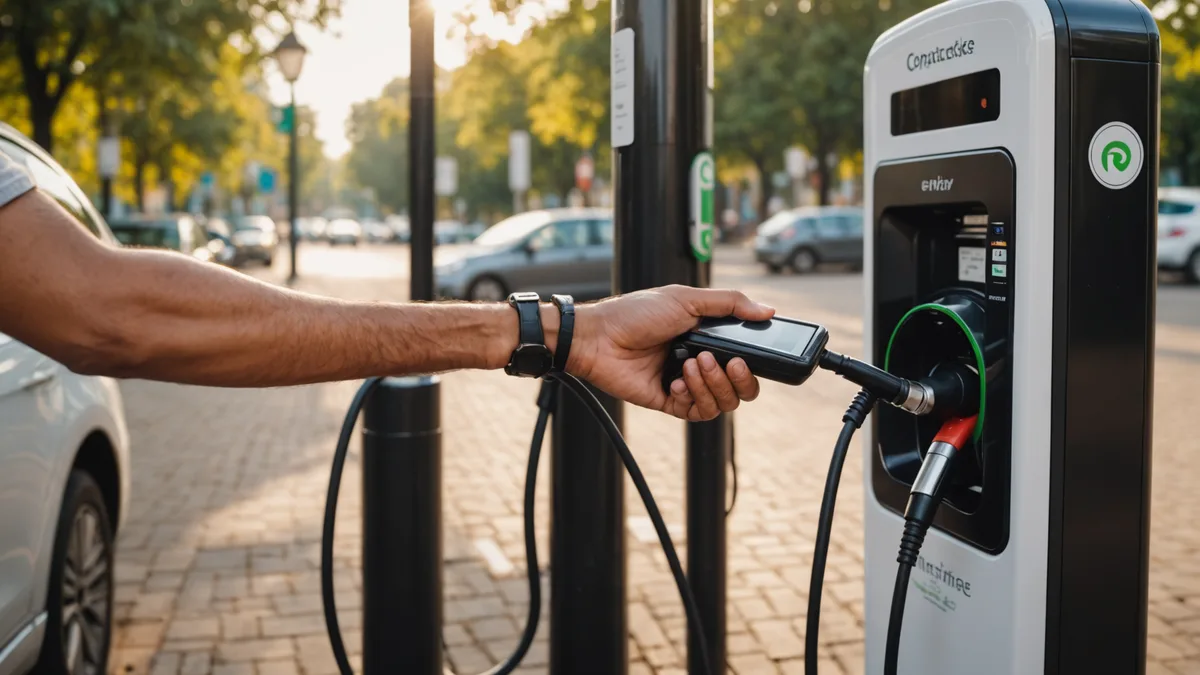
Our pilot network's first payment dispute involved a Rs 180, charge that a driver said had not completed. The session record showed 4.2 kWh delivered over 38 minutes, with a clean StopTransaction from the driver's app. The UPI authorization hold captured Rs 200, at session start, while the actual charge was Rs 180. Its partial release took three business days to appear in the driver's account. The driver saw a collected charge without a refund. The operator saw a correct transaction. Both views were valid.
That divide between accurate billing and perceived fairness is central to Indian EV payment collection. Western markets addressed much of it through credit card holds and merchant rules consumers have learned over decades. UPI and prepaid wallet flows in India create a different mental model, so your billing structure directly affects monthly disputes and confusion calls.
Per-kWh Billing: The Clear Model
Per-kWh billing is the clearest model for drivers: pay for the energy consumed, tied directly to the electricity rate. At Rs 15 per kWh, a 7.4 kW AC charger costs around Rs 888, for a full 8-hour charge, depending on the vehicle's actual acceptance rate. Drivers familiar with electricity find this easy to understand.
The operational burden sits with metering. Per-kWh billing needs accurate MeterValues at useful intervals, typically every 30 to 60 seconds, with your CSMS combining them into a dependable session total. OCPP 1.6 messages may arrive out of order or disappear during network interruptions. Billing must perform gap filling and sequence validation, or minor errors will build into discrepancies over time.
Under CERC guidelines and the evolving BEE framework for EV charger metering accuracy in India, billing-grade meters generally allow measurement uncertainty within +/- 2%. Some Indian AC wall-box chargers miss that standard across operating temperatures. Before choosing per-kWh billing, check your hardware's metering class. A meter that repeatedly reads high or low can cause disputes even when the software works correctly.
Our recommendation for most operators: choose per-kWh long term, but fund metering quality and CSMS validation. Do not assume the hardware includes billing-grade meters.
Per-Minute Billing: Easy to Explain, Hard to Defend
Per-minute billing is easiest to explain: Rs 4 per minute makes a 45-minute charge cost Rs 180 regardless of energy accepted. There is no metering calibration or MeterValues accumulation, only session duration from StartTransaction to StopTransaction.
Per-minute billing can be structurally unfair across vehicles and battery states. A Tata Nexon EV arriving at a 7.4 kW charger with 20% battery will accept near-full power and receive good value per minute. A 2-wheeler or plug-in hybrid arriving at 70% may taper to 2-3 kW near full, while paying the full rate for decreasing energy delivery. The point is not that per-minute billing fails. The point is that it fits day-to-day operations better in some contexts. This is EV charging physics, not a billing bug, but drivers notice: "I paid the same as him but got half the charge." Such escalations are difficult when billing was technically correct.
Per-minute pricing also encourages drivers to unplug once their target state of charge is reached, improving turnover at busy sites. That helps operators focused on utilization. Operators prioritizing revenue per session are better served by per-kWh.
Flat Session Fee: Right for Specific Contexts
A flat session fee, Rs X per session regardless of duration or energy, suits limited contexts: high-volume sites with consistent session patterns, operators seeking to remove billing complexity, and pilots still learning their demand profile.
The risk is simple: sessions much longer than average subsidize shorter ones, while encouraging overstaying at busy sites. A driver parked for 4 hours pays the same flat fee as one parked for 45 minutes. That is less a dispute issue than a capacity issue. At high-utilization sites, flat pricing without overstay enforcement directly limits revenue.
We have seen flat session pricing work as a transitional model at new sites while operators establish baseline demand data. After 2 to 3 months of session-duration data, there is enough evidence to set a defensible per-kWh or per-minute rate.
UPI Authorization Holds and Refund Timing
Whatever billing model you select, UPI payment collection requires a clear understanding of authorization holds and clear driver communication.
Most UPI EV payment flows place a fixed maximum hold, through a mandate or block, when the session starts. At the end, the actual amount is captured and the balance released. Release timing varies by bank and UPI app. NPCI guidelines set a defined release window, yet drivers often see the hold for 24 to 72 hours after the session, and sometimes longer when small-value amounts receive lower priority in bank reconciliation batches.
Set the pre-authorization hold carefully. A Rs 500 hold for a likely Rs 120 session widens the refund gap and frustrates drivers. Using the average session value with headroom narrows it. For most AC sessions in the Rs 80 to 200 range, Rs 300 to 350 provides coverage without needless friction.
Which Billing Model to Choose
Operators able to fund metering validation should choose per-kWh. It is fairest, ties revenue to energy costs, and becomes easier to explain as drivers learn EV running costs.
Operators needing simplicity now and a later upgrade should use per-minute billing, with a clear rate and a reasonable overstay fee after a defined session limit. It is simpler operationally, and disputes are easier to settle than metering discrepancies.
Use a flat session fee only at new or low-volume sites while collecting demand data. Do not set flat pricing at a site expected to reach high utilization within 6 months, since changing models for established drivers causes churn and confusion.
The right billing model limits refund calls, improves collection certainty, feels fair to drivers, and supports network growth.